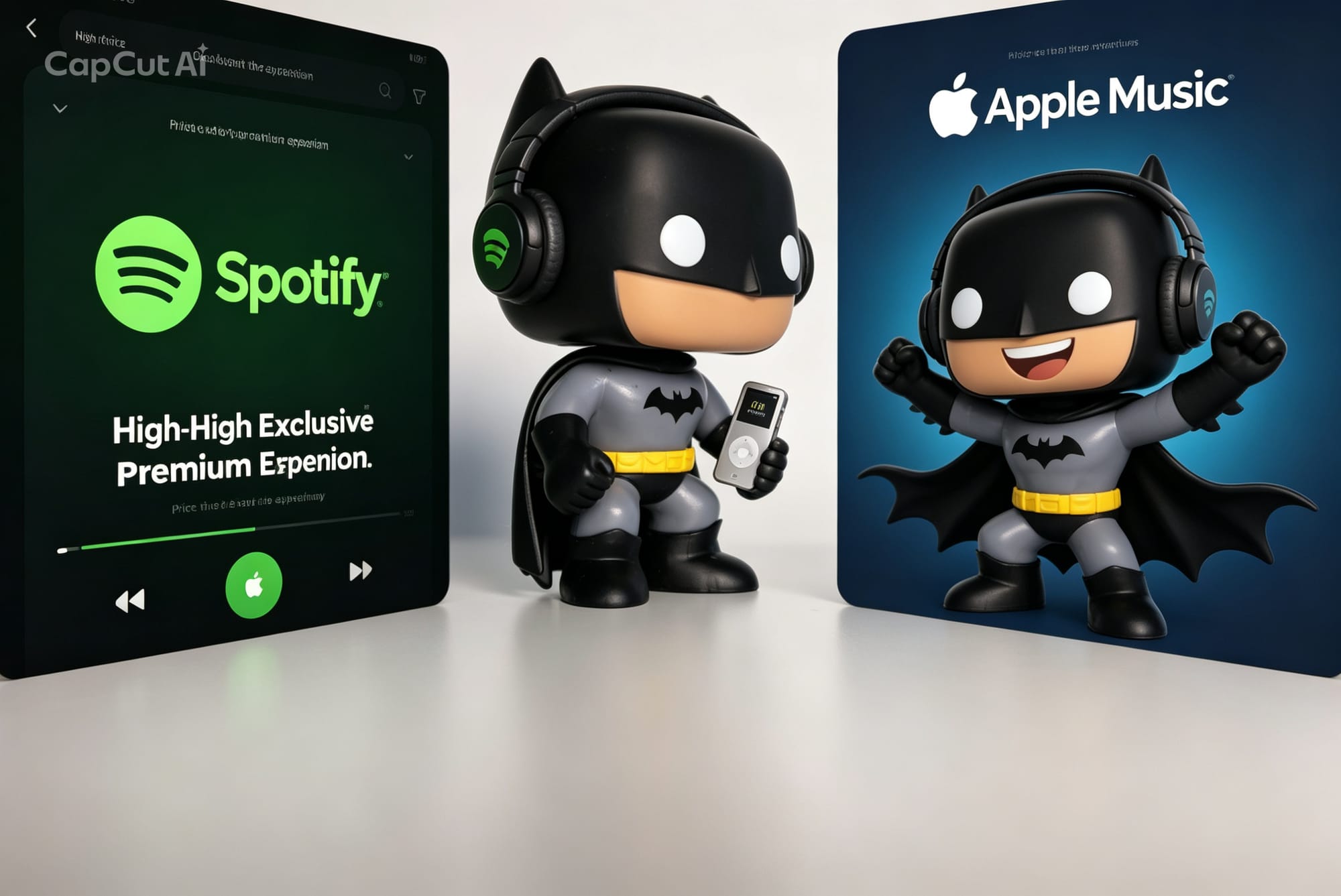
Dear Spotify — Thank You for the Price Increase. Sincerely.
How a Greedy Invoice Sent Batty Back to Where It All Started.
Let's start at the beginning. The actual beginning.
There was a time — and those of a certain vintage will remember this with either fondness or mild psychological scarring — when you made your own playlists by sitting next to a radio with a cassette recorder, finger hovering over the record button, waiting. Waiting for the DJ to stop talking over the intro. Waiting for the right moment. Occasionally missing it entirely and ending up with seventeen seconds of a different song at the start of side B.
This was the original music streaming. Except the buffering was your own nervous system, the algorithm was Radio Austria, and the sound quality was whatever the cassette head felt like delivering that particular morning.
Batty made mixtapes. Many mixtapes. With considerable dedication and a felt-tip pen for the label. This is relevant context for everything that follows.
The Wheel. The Click. The Everything.
Then Apple released the iPod.
The year was 2001. The device was small, white, and came with a click wheel that was either the most elegant piece of interface design ever produced or the most addictive tactile experience available without a prescription, depending on how many hours you'd spent scrolling through it. The answer, for Batty, was: rather a lot.
iTunes followed. And suddenly — for the first time in human history — an entire music collection could live in one place, be organised by album, sorted by artist, have proper metadata, and fit in a jacket pocket. The cassette era produced mixtapes labelled in felt-tip. iTunes produced playlists. With artwork. And correct track listings.
The library grew. Albums were ripped. The click wheel was worn to a smoothness that suggested heavy use. Everything was magnificent.
And then the hard drive died.
Not a gentle decline. Not a warning. A sudden, complete, entirely unannounced departure from functional existence. Several hundred albums, carefully ripped and tagged, gone. This is the moment that music historians would describe as The Great Library Collapse of the iTunes Era, and Batty would describe as approximately four stages of grief condensed into one afternoon.
There was a backup. It was not current. Starting again was done with the grim determination of someone who has been here before and knows exactly how long it takes.
The Spotify Years — A Genuinely Good Relationship
Streaming arrived and changed the conversation entirely.
Spotify, specifically, was a revelation. The library problem was solved permanently — not by owning the music but by accessing everything, which turned out to be a different and arguably superior model. The Discover Weekly algorithm, in its early years, had an almost uncanny ability to surface something you'd never heard that you immediately needed. The interface was clean. The app worked across every device. The podcast integration happened and then became too dominant but that is a separate editorial.
For years — many years — Spotify was the correct answer to the question of how to listen to music. It worked. It was good. Batty recommended it without hesitation.
Then the invoices started changing.
Not once. Not as a considered single adjustment explained with some transparency. But repeatedly, in the way that a company does when it has calculated that the switching cost is high enough that customers will absorb another increase before deciding to leave. The price went up. Then it went up again. Then — and this is the one that crossed the line from "acceptable business decision" to "genuinely cheeky" — it went up again, with less notice and more confidence than the situation warranted.
Batty looked at the invoice. Batty looked at the Apple One subscription sitting one screen away, covering Music, TV+, Arcade, iCloud storage, and several other things, for a monthly figure that was now less than Spotify alone.
The maths, as maths often does, made the decision for me.
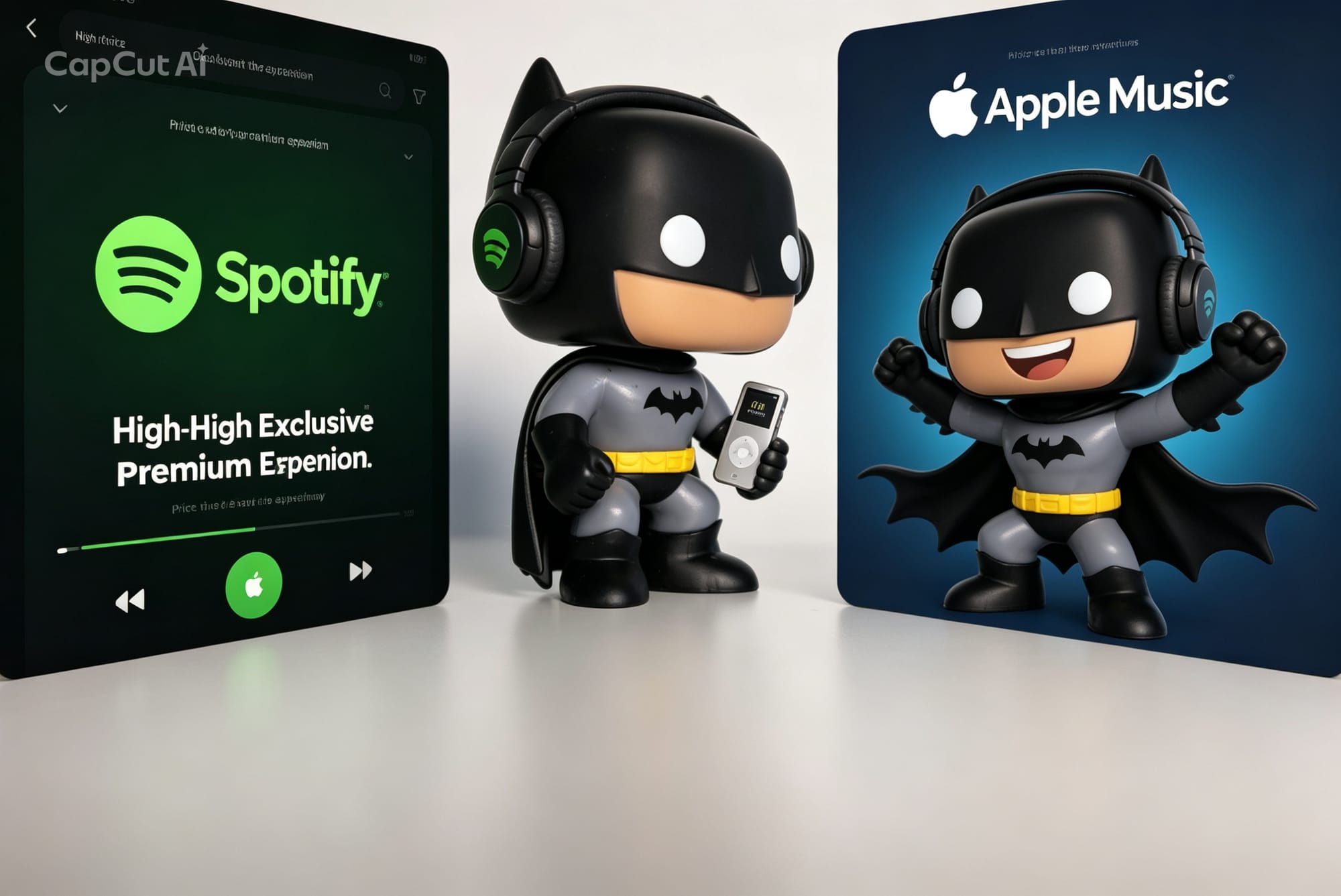
The Return — This Time It Actually Works
Here is an admission: Apple Music and Batty have previous form. There were attempts, over the years, to migrate. They did not go well. The interface felt counter-intuitive in ways that were difficult to articulate precisely but easy to feel. The library integration with existing files was an adventure in the wrong direction. Batty retreated to Spotify on multiple occasions, tail moderately between wings, and stayed there.
Something changed.
Apple Music in 2025 is not Apple Music of five years ago. The interface — on iPhone, on Mac, on iPad, across everything — has been refined to the point where it no longer requires a user manual and three attempts before it makes sense. Spatial Audio on supported headphones delivers a listening experience that justifies the format. Lossless audio is there for those whose equipment and ears can tell the difference (Batty's can; this is not a boast, merely a fact with equipment implications).
The Apple ecosystem integration, specifically, is the argument that cannot be answered by a competitor who isn't Apple. The same subscription handles the iPhone. The HomePods in the house. The Mac in the office. The AirPods on the flight. No separate accounts, no switching between services, no explaining to a hotel television why Spotify requires a different login than everything else. One account. One invoice. Everything connected.
Siri integration has also improved to the point where it occasionally produces the correct result on the first request, which represents significant progress.
The music discovery — historically Apple Music's weakest point compared to Spotify's algorithm — has matured. The curated stations are genuinely good. The radio programming, particularly Beats 1 and the genre stations, does something that algorithmic playlists sometimes miss: it introduces context. Somebody chose this sequence. That choice is audible.
The Verdict
Spotify was, for a long time, the correct choice. It earned the loyalty, delivered genuine quality, and created something that worked. The price increases did not negate that history. They simply changed the equation.
Apple Music is now, in 2025, good enough that the switch is not a compromise. It is a lateral move — different strengths, same essential quality, significantly better value when counted against everything else in the Apple One bundle.
The click wheel is gone. The mixtapes are in a box somewhere in the Salzkammergut. The felt-tip pen labels have faded. The music, remarkably, is better than it has ever been — cleaner, more accessible, more complete.
And it's all on one invoice.
THANK YOU, Spotify. The price increase was, in retrospect, exactly the push required.
🦇 battyontour.com — opinions on airlines, hotels, restaurants, and apparently also music streaming.