Learn to fly: First, a Doctor
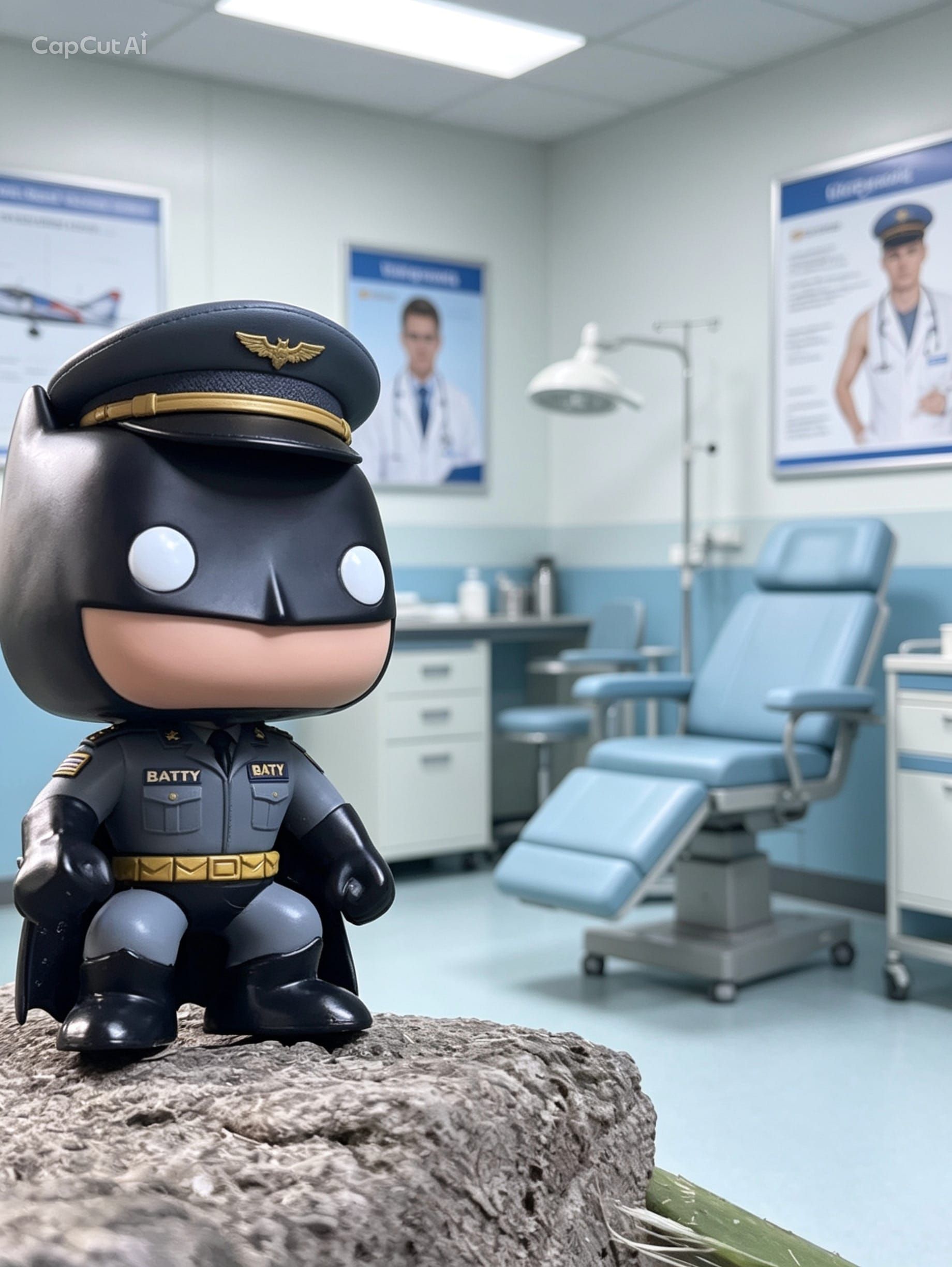
The Medical. Because Even Bats Need a Doctor's Note.
Before you fly a single metre.
Before you book a trial flight.
Before you even call a flight school.
You need a doctor.
Not your regular doctor. A special doctor. One who is certified by Austro Control, trained in aviation medicine, and equipped with a checklist that covers everything from your eyesight to your blood pressure to — and this is where it gets interesting — your psychological profile.
Welcome to the Aviation Medical. The first item on the checklist. And the one that surprises people the most, because it turns out there are two of them.
Two Medicals. One Decision.
EASA — the European aviation authority that governs pilot licensing across Europe — has created exactly two classes of medical certificate for pilots.
Class 2 and Class 1.
They are not the same thing. They are not interchangeable. And the choice between them is one of the most important decisions you will make before you spend a single hour in an aircraft. Most beginners don't know this choice exists until someone tells them. Consider yourself told.
Class 2 — The Civilised Option
Class 2 is the medical certificate required for a Private Pilot Licence. Also for an Instrument Rating on top of that PPL. Also for a Night Rating. In short: everything a hobby pilot could reasonably want to do, Class 2 covers.
The examination itself is — by aviation medicine standards — quite manageable. A certified Aviation Medical Examiner checks your vision, your hearing, your blood pressure, your heart, and your general state of health. Blood test. Urine test. The usual catalogue of things you'd rather not think about on an empty stomach.
No psychology test. No stress ECG. No full-day ordeal in a medical centre.
Cost: approximately €150–250. Duration: a morning.
How long is it valid?
This is where age becomes relevant for the first time in aviation — and it won't be the last.
| Age | Validity |
|---|---|
| Under 40 | 5 years |
| 40–49 | 2 years |
| 50 and over | 1 year |
Under forty, you pass your Class 2 Medical and it's valid until you're practically a different person. Over fifty, you're seeing the aviation doctor annually. The sky doesn't care how you feel about this.

Class 1 — The Serious One
Class 1 is the medical certificate required for a Commercial Pilot Licence. For an ATPL. For any professional flying. If money ever changes hands because you are operating an aircraft, Class 1 is what stands between you and that activity.
The initial examination is a different experience entirely.
It must be done at a certified Aeromedical Centre — in Austria, that means the AMC at the Wiener Privatklinik, which has the distinction of being able to run the entire examination in a single day. One day. Which sounds efficient until you learn what fills that day.
Full physical examination. Vision testing — acuity, colour, fields, pressure. Audiometry. Blood tests. ECG. Lung function. And — the one nobody mentions in the brochures — a psychology assessment. Personality test. Logical thinking. Memory. Stress tolerance. A conversation with a doctor about how you handle pressure, relationships, and your general attitude toward mental health.
Aviation, it turns out, would like to know whether you are the kind of person who stays calm when things go wrong at altitude. Reasonable request. Thorough process.
Cost: let's just say the aviation medical industry is not struggling. Renewal is cheaper. First time is an experience.
Validity:
| Age | Validity |
|---|---|
| Under 40 | 12 months |
| 40 and over | 6 months |
Yes. Every year. Or every six months. The Class 1 Medical is a recurring appointment for life.
The Argument for Doing Class 1 First
Here is the thing nobody says out loud at the beginning of pilot training:
If there is any chance — any chance at all — that you might want to go beyond the PPL someday. CPL, ATPL, instructing, anything professional. Do the Class 1 now.
The argument is simple and slightly uncomfortable.
The Class 1 Medical is harder to pass than the Class 2. It checks more things, at tighter tolerances, with a psychology component that doesn't exist in the Class 2. The younger you are when you sit it, the better your baseline health, the better your vision, the better your cardiovascular numbers are likely to be.
More importantly: if something comes back that makes you ineligible for Class 1 — a heart condition, a vision issue, something neurological — you want to know this before you spend €15,000 on flight training. Not after. Before.
The Class 1 costs more. The examination takes a full day. It is more thorough, more demanding, and more expensive than the Class 2.
It is also the only way to find out, with certainty, whether professional aviation is a path that's medically available to you.
Batty did the Class 1 first. Not because it was comfortable. Because it was the logical thing to do, and aviation is a discipline that rewards logic over optimism.
So. Which One Is It?
You've heard the arguments. You've seen the numbers. And now — in the grand tradition of a format that absolutely nobody expected to appear in an aviation blog — it's time to make your choice.
One More Thing
You passed the medical. You have the certificate. You are, officially, medically fit to operate an aircraft.
The flight school will now ask you for something else.
Something nobody tells you about in advance. Something that has nothing to do with the aircraft.
It involves a radio. And an examiner. And a specific set of words that must be said in a specific order.
That's Episode 2.
🦇 The Bat Who Needed a License — battyontour.com & Batty on Air.
Episode 2: Please Say Again. The Radio Certificate. Coming next.
Sources: Austro Control AMS · AMC Wiener Privatklinik · EASA Class 1 Guide 2026 · EASA Class 2 Guide 2026